Facebook:
The World’s Leading Social Media and Digital Marketing Platform
Facebook is one of the most powerful and influential social media platforms today. Since launching in 2004, it has changed how people communicate, share information, build communities, and conduct business online. What began as a simple networking site for college students has grown into a global digital ecosystem that connects billions of users across various countries, cultures, and industries. Today, Facebook serves as a platform for personal communication, entertainment, education, marketing, business growth, and social engagement.
One major reason for Facebook’s popularity is its ability to connect people no matter where they are. Users can create personal profiles, add friends, share updates, upload photos and videos, and interact with others through comments, reactions, and messages. These features have made communication faster and more accessible than ever. Families separated by distance can stay in touch, friends can share life updates instantly, and communities can gather around shared interests through groups and pages.
Facebook is not just a social networking platform; it is also a key source of information and news for millions. Users can follow news organizations, educational institutions, public figures, and industry experts to stay updated on current events and trends. With personalized content feeds, Facebook gives users information that matches their interests and preferences. This has made the platform a central hub for discovering new content, learning skills, and engaging in discussions on various topics.
For businesses, Facebook has become an essential marketing tool. Companies of all sizes use Facebook to create an online presence and connect with potential customers. A Facebook Business Page lets organizations showcase their products, services, brand story, and contact information. Unlike traditional advertising methods, Facebook gives businesses direct access to their target audience. This allows them to build relationships and foster customer loyalty.
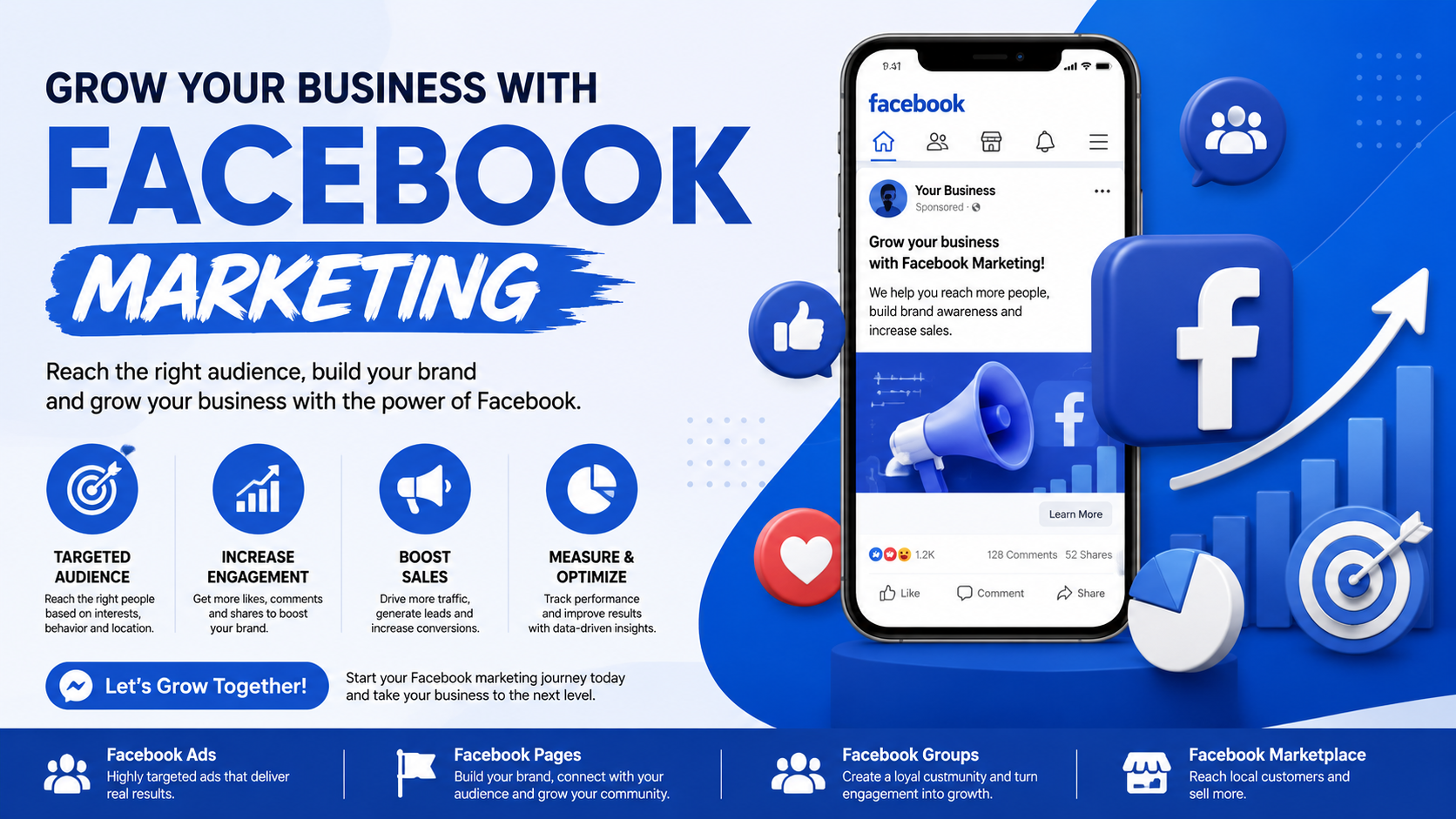
One of Facebook’s most valuable tools for businesses is Facebook Ads. The advertising system offers precise targeting options that let marketers reach specific audiences based on age, gender, location, interests, behavior, education, occupation, and more. This precision helps businesses make the most of their marketing budgets by ensuring that ads reach users likely to be interested in their products or services. Whether a company aims to drive website traffic, generate leads, boost sales, or increase brand awareness, Facebook Ads offers various campaign objectives to support these aims.
Facebook advertising has changed digital marketing because it is affordable and scalable. Small businesses with limited budgets can compete with larger corporations by creating targeted advertising campaigns. A local business can promote its services in a specific area, while a global brand can launch campaigns aimed at audiences across several countries. This flexibility makes Facebook one of the most accessible and effective marketing platforms available today.
Another important aspect of Facebook is content marketing. Businesses and creators use engaging content to attract and keep audiences. High-quality images, informative articles, entertaining videos, and interactive posts help brands build credibility and authority in their fields. By consistently sharing valuable content, organizations can earn their audience’s trust and encourage long-term engagement. Content that resonates with users often generates likes, comments, shares, and organic reach, helping brands increase their visibility without relying solely on paid advertising.
Facebook Groups have also become a key feature for community building. These groups allow people with shared interests to connect, discuss topics, ask questions, and support each other. Businesses often create groups to nurture closer relationships with customers and build communities around their products or services. These groups provide valuable insights into customer needs and preferences, helping businesses enhance their offerings and customer experience.
The introduction of Facebook Marketplace has expanded the platform’s utility. Marketplace lets users buy and sell products locally, allowing individuals and businesses to reach nearby customers. From electronics to furniture, clothing to vehicles, a wide variety of products can be listed and sold through Marketplace. Its integration with Facebook makes it easy for users to browse listings, communicate with sellers, and complete transactions.
Facebook Live is another powerful feature that allows real-time interaction between creators and audiences. Businesses, influencers, educators, and public figures use live streaming to share updates, conduct demonstrations, host events, answer questions, and engage directly with viewers. Live content often generates higher engagement levels because it creates a sense of authenticity and immediacy. Audiences appreciate the chance to interact in real-time, making Facebook Live an effective tool for building relationships.
Video content has become increasingly important on Facebook. With the rise of short videos and changing user preferences, Facebook has invested significantly in video features such as Reels and Watch. Video content tends to grab attention more effectively than text-based posts. This format is valuable for marketers and content creators. Businesses use videos to demonstrate products, share customer testimonials, provide educational content, and tell compelling brand stories. The popularity of video content continues to shape marketing strategies across the platform.
Facebook also plays a significant role in personal branding. Professionals, entrepreneurs, freelancers, and content creators use the platform to showcase their expertise and grow their audiences. By sharing insights, achievements, experiences, and valuable content, individuals can position themselves as authorities in their fields. A strong personal brand on Facebook can lead to networking opportunities, business partnerships, career growth, and greater visibility.
The platform’s messaging services enhance communication capabilities even further. Facebook Messenger allows users to send instant messages, voice notes, images, videos, and documents. Businesses often use Messenger in their customer service strategies to respond quickly to inquiries and support requests. Automated chatbots can also improve efficiency and offer instant help to customers.
Facebook analytics tools provide valuable data that helps businesses measure performance and improve marketing efforts. Metrics such as reach, engagement, click-through rates, conversions, and audience demographics allow marketers to assess campaign success. By analyzing this data, businesses can find successful strategies, refine targeting, and enhance overall marketing performance. Data-driven decision-making is one of the key advantages of using Facebook for business growth.
Another reason for Facebook’s ongoing success is its adaptability. The platform regularly introduces new features and updates to keep up with changing user needs and technological advancements. From mobile optimization and improved privacy settings to AI-powered recommendations and immersive content experiences, Facebook constantly evolves to stay relevant in a competitive digital landscape.
Education and learning have also gained from Facebook’s wide reach. Educational institutions, trainers, coaches, and online course providers use the platform to share knowledge and connect with learners. Facebook groups, live sessions, and educational pages create opportunities for collaborative learning and skill development. Many people have used Facebook to access free educational resources, participate in discussions, and connect with experts in various fields.
Nonprofit organizations and social causes utilize Facebook to raise awareness, mobilize supporters, and generate donations. The platform enables organizations to reach large audiences quickly and share impactful stories that inspire action. Fundraising campaigns, awareness initiatives, and community outreach programs often gain more visibility through Facebook’s extensive network.
The future of Facebook is closely tied to the continued growth of digital communication and online business. As technology keeps advancing, the platform is likely to incorporate more AI, augmented reality, and personalized user experiences. Businesses and creators who embrace these changes will probably find new opportunities for engagement, growth, and innovation.
In conclusion,
Facebook has evolved into more than just a social networking site. It is a digital platform that supports communication, marketing, commerce, education, entertainment, and community building. Its powerful advertising tools, broad audience reach, varied content formats, and business-friendly features make it a valuable resource for individuals and organizations. Whether someone wants to stay in touch with friends, build a personal brand, grow a business, promote a cause, or engage with a global audience, Facebook offers the tools and opportunities needed to achieve those goals. As one of the most influential platforms today, Facebook continues to shape how people interact, share information, and create opportunities in an increasingly connected world.